A Teacher's Tribute: Crafting Gifts with Heart
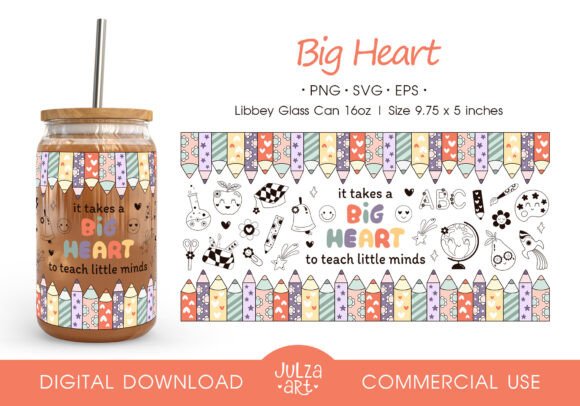
I have sat in front of my machine, ready to stitch, with countless designs over the years. Some are purely decorative, others are functional. But when I evaluate a file like the Teacher 16oz Glass Can Wrap PNG SVG, I’m looking for something more. I’m looking for the feeling it will give someone when they receive the finished product. This isn’t just about stitching a pattern; it’s about stitching a sentiment.
The Immediate Heartfelt Impression
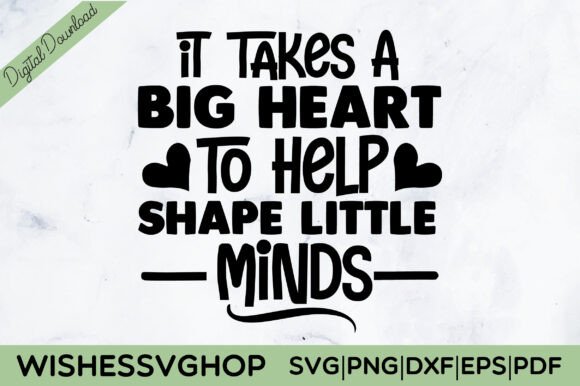
First impressions matter, both for me as the embroiderer and for the eventual recipient. The phrase “It takes a Big Heart to Teach Little Minds” isn’t just text; it’s a theme. The design carries a warm, appreciative, and slightly nostalgic mood. It speaks directly to a relationship—the caregiver and the student. This makes it inherently personal. As a graphics file, its layout is built for a specific object, a glass can, which tells me it’s thoughtfully scaled. That thoughtful scaling translates well when I consider it for other embroidery projects. The personality is gentle and sincere, not flashy or overly complicated, which is perfect for a gift meant to feel handmade and heartfelt.
The Real-World Embroidery Scenario
Let’s walk through a typical scenario. A client, perhaps an Etsy seller or a school PTO member, requests a batch of custom embroidered tote bags as end-of-year gifts for teachers. They send me this design. My job is to translate that digital file into thread and fabric. My immediate thought isn't about the can wrap itself; it’s about how the core design—that message and its aesthetic—will perform on a bag.
Will the lettering stitch out clearly on a woven canvas tote? Will the potential decorative elements around the text become too dense, making the bag stiff? This is where the practical judgment begins. The design’s origin as a wrap suggests it likely has clean lines and a layout that avoids extreme detail, which is a positive sign for machine embroidery. It feels like a design that would belong beautifully on a range of products: that tote bag, a cozy sweatshirt embroidery for a teacher, a simple pillow cover for a classroom reading corner, or even a baby embroidery item for a preschool teacher’s new little one. Its appeal is in its universal message of appreciation.
Where This Design Finds Its Home
For small business merchandise and craft business products, this design adds immediate value. Stitched onto a high-quality tea towel or apron, it elevates a simple item into a personalized gift. For holiday embroidery, especially during Teacher Appreciation Week or the end of the school year, it becomes a timely and emotionally resonant product. In my experience, customers connect with this kind of explicit gratitude. It boosts giftability and recognition instantly. The finished product doesn’t just look nice; it tells a story, which enhances customer trust and buyer engagement for the maker selling it.
Navigating the Practical Stitching Considerations
However, no design is perfect for every application. My professional eye sees a few areas where this Teacher 16oz Glass Can Wrap PNG SVG would need careful handling. The primary consideration is scale. If I were to adapt it for a much smaller item, like a cap or a small embroidered patch, the text detail could become problematic. Tiny lettering requires precise stitch density and can blur on textured fabrics.
I would also be cautious with very stretchy or thin fabrics, like on certain baby clothes. The design might need significant stabilizer support to prevent puckering. On dark fabric, I would plan my thread colors carefully to ensure the message pops with enough contrast. And for items destined for frequent washing, like a kitchen towel, I would test the stitch integrity to ensure the satin stitch or fill stitch areas hold up well over time.
The Designer’s On-Hoop Checklist
Before I ever stitch this for a client project, my process involves a few critical steps. These are my non-negotiable notes for any design, especially one destined for commercial embroidery or personalized gifts.
- Always, always test the design on scrap fabric first. Use the same material as the final project.
- Check thread color contrast against both light and dark backgrounds. A simple black and white mockup can help visualize this.
- Review stitch density by previewing the file in your software. Look for areas that might be too thick.
- Confirm your hoop size can accommodate the design comfortably without forcing excessive resizing.
- Inspect small details like the corners of letters or any decorative accents. Ensure they will stitch cleanly.
- Verify the embroidery file licensing terms. Before selling any finished product, know if your use is for personal or commercial projects. This is a cornerstone of professionalism.
These steps separate a hobbyist experiment from a reliable handmade product. They ensure the final item reflects the care intended by the design itself.
The Final Stitch: Value Beyond the Thread
When I step back and look at a design like this holistically, its true value isn't merely in its digital form as a Crafts graphic. Its value is realized in the reaction it gets. A teacher unwrapping a custom embroidered tote bag with this message doesn’t just see a bag. They see appreciation made tangible. For the Etsy seller or creative entrepreneur, that reaction translates into repeat customers and positive reviews. It builds brand consistency around thoughtful, meaningful products.
The Teacher 16oz Glass Can Wrap PNG SVG, when thoughtfully applied to appropriate embroidery projects, performs this emotional translation beautifully. It’s a design that reminds me why I do this work: to connect people through thread. My advice is to embrace its heartfelt theme, but to pair that with rigorous practical preparation. Choose the right fabric, the right product type, and the right stabilization. Do that, and your finished work will carry not just a lovely design, but the big heart it celebrates.