A Teacher’s Heart, Made for Embroidery
When you’re evaluating an embroidery design for real-world use, it’s not just about the digital file. You have to envision it stitched, worn, and loved. That’s the lens I bring to Strong to Be a Preschool Teacher Crazy. As a designer who’s seen countless projects from file to finished product, I look at this design and immediately start mapping out its practical life on fabric.
The Immediate Personality: Warm, Bold & Ready to Stitch
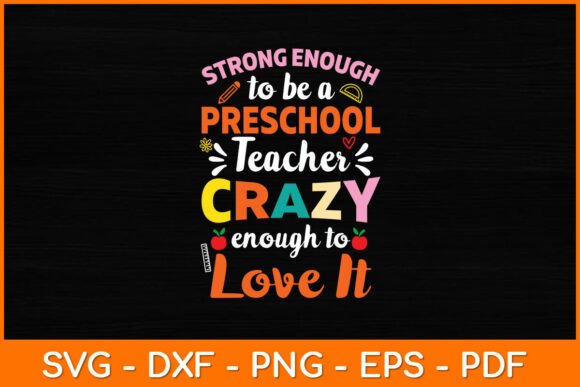
The first thing that strikes me about Strong to Be a Preschool Teacher Crazy is its mood. It’s not a timid, delicate sentiment. The phrase has a confident, playful warmth—a celebration of the joyful chaos that defines early childhood education. This isn’t just text; it’s a statement with personality. For an embroidery designer, that’s gold. It tells you this design isn’t meant for a subtle corner on a handkerchief. It’s meant to be a centerpiece, a bold declaration on a garment or item that will be seen and appreciated.
From a visual standpoint, the layout feels straightforward and balanced, which is excellent for embroidery. Complex, overly detailed layouts can become muddled in stitch translation. This theme suggests clean lettering and likely accompanying graphical elements that support the message. That means it’s primed for clear satin stitches for text and perhaps fill stitches or applique for any decorative accents. The “crazy enough to love it” energy translates into a design that should stitch out with visual clarity and a friendly, approachable vibe.
Where This Design Thrives: Real Project Scenarios
Let’s walk through a real scenario. Imagine you’re a small shop owner preparing a custom embroidered tote bag for a teacher’s appreciation gift. You’re thinking about fabric choice, thread colors, and how the finished product will feel in the recipient’s hands. Strong to Be a Preschool Teacher Crazy jumps out as a perfect fit. A tote bag is a practical, daily-use item. This design, stitched prominently on the front, turns a simple bag into a personalized, meaningful artifact. It celebrates the profession visibly.
That’s just one application. This embroidery file naturally belongs to a whole family of projects:
- Custom Apparel: It’s a standout for sweatshirts, t-shirts, or aprons—items teachers wear in the classroom or out in the world. The message resonates on a personal level.
- Personalized Gifts: Think baby items for a teacher’s new child, pillow covers for a cozy home, or kitchen towels as a holiday gift. It adds a handmade, thoughtful layer.
- Small Business Merchandise: For an Etsy seller or craft fair vendor specializing in educator-themed products, this design is a ready-made asset for patches, caps, or tea towels.
- Boutique Branding: A children’s boutique or educational supply shop could use it on staff uniforms or branded merchandise, building community and recognition.
The key is that the design’s theme is specific yet universally appreciated within its niche, giving it strong giftability and commercial appeal for targeted audiences.
Navigating the Practical Stitching Landscape
Now, for the practical judgment every embroidery designer must make: how will this file perform on the machine and fabric? Here’s my assessment based on typical project execution.
Strong to Be a Preschool Teacher Crazy likely has areas of text and possibly decorative elements. On light, stable fabrics like canvas for a tote bag or a cotton sweatshirt, it should stitch beautifully with proper stabilizer. The clarity of the message depends on clean lettering. You’ll want to check the stitch density in your software preview—particularly for any fill areas—to ensure it’s suitable for your chosen fabric weight. Too dense on a thin t-shirt could cause puckering; too light on a thick towel might look sparse.
Considerations for Success & Areas for Caution
To maximize visual appeal and stitching clarity, approach this design with a professional’s checklist:
- Always test on scrap fabric first. This is non-negotiable. It reveals how the thread colors interact with your background fabric and how the stitches lay down.
- Pay close attention to small details. If the design includes tiny lettering or intricate corners, consider your hoop size and whether a satin stitch or a simpler running stitch is being used. Smaller hoop sizes might compromise very fine details.
- Fabric texture matters. On highly textured fabrics like some blankets or knit caps, the design’s clarity can soften. On smooth, dark fabrics, ensure your thread color palette offers strong contrast for readability.
- For curved surfaces like caps, the layout needs to be adaptable. Preview the design on a curved mockup in your software to see if any elements might get distorted on the seam.
- Products needing frequent washing, like baby clothes or kitchen towels, require robust stitching. Check that the design isn’t overly delicate in areas that might fray with wear.
These steps aren’t just about avoiding mistakes; they’re about building customer trust. A clean, professional finish on a handmade product or commercial embroidery project speaks volumes about your craft.
The Bigger Picture: Value, Presentation & Professional Use
Ultimately, using a design like Strong to Be a Preschool Teacher Crazy affects more than just the stitch-out. It influences the perceived value of the finished product. On a custom apparel item, it transforms a generic sweatshirt into a story. For a personalized gift, it adds an emotional layer that generic store-bought items lack. For a small business, it creates a cohesive product that fits a specific market niche, enhancing brand consistency.
As a commercial asset, its appeal is clear. It’s ready for use in printable mockups for digital product listings, or as a physical embroidery project for craft business inventory. The “Crafts” and “Graphics” origin means it’s built for this creative ecosystem. However, a crucial professional note: always confirm the licensing terms before selling finished items. Understanding whether the file is for personal use, commercial use, or both is essential for operating your embroidery business ethically and legally.
My final, friendly advice? This design has a warm, bold heart. It’s poised to stitch into projects that people will genuinely connect with. Approach it with the practical care of a seasoned maker—test it, match it to the right fabric and product, and let its celebration of teaching shine through your stitches. That’s how a digital file becomes a beloved, real-world thing.