A Groovy School Wrap Review for Embroidered Products
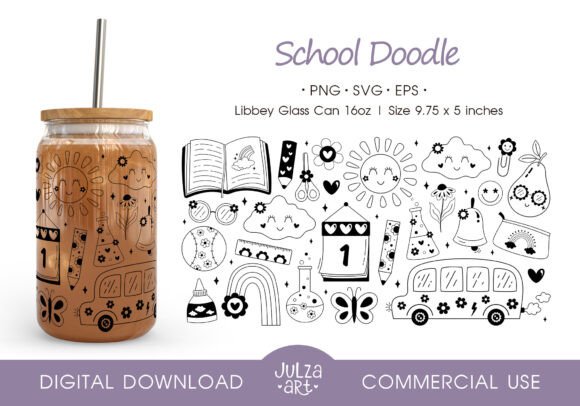
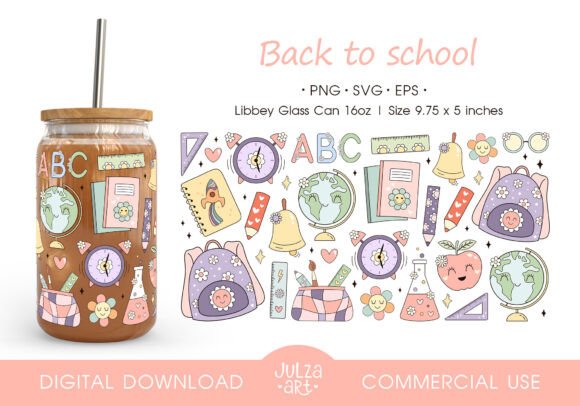
When you’re looking at a digital embroidery file, the question isn’t just whether it looks good on screen. It’s about whether it will stitch out cleanly, resonate with a customer, and fit seamlessly into your real-world projects. That’s the lens I bring to the Groovy School Glass Can Wrap PNG SVG. Despite its name suggesting a sublimation focus, this design offers a fantastic foundation for embroidery, especially for those crafting in the handmade and personalized gift space.
The First Stitch Impression: Vintage School Spirit
The initial mood this design creates is pure, cheerful nostalgia. The “Groovy School” theme, with its playful layout and retro feel, immediately suggests a project for a teacher, a student, or anyone celebrating education with a lighthearted touch. As an embroidery file, the shape is clearly defined, and the level of detail appears manageable—not overly dense, which is a relief for smaller hoop sizes or textured fabrics. Its visual personality isn’t loud; it’s friendly and approachable. This tells me it belongs naturally on items meant to convey warmth and personal connection.
Imagine stitching this out for a custom embroidered tote bag for a favorite teacher. The design’s width, noted at 9.75 inches for its primary can-wrap purpose, translates nicely to a large, central placement on a bag panel. That scale allows the design to be a statement piece without overwhelming the fabric. The thought process here is practical: will the stitches hold up on canvas? Will the colors pop? Does the theme feel genuine rather than generic? For this design, the answer leans toward yes, provided you adapt your approach for embroidery.
Where This Groovy Design Shines in Embroidery
This isn’t a one-size-fits-all embroidery file, but its characteristics point to several strong use cases. For custom apparel like sweatshirts or t-shirts, its sizable, cohesive shape would work well as a chest or back design, particularly on a solid color background. The theme lends itself perfectly to baby clothes for teacher-parents or nursery decor items, adding a sweet, personalized touch. As an embroidered patch, it could be fantastic—the clear boundaries and likely moderate stitch density would make it sturdy and attachable to bags or caps.
Think about holiday gifts or boutique products. A kitchen towel or apron with this design embroidered along the bottom could be a standout gift for an educator. For a small business owner specializing in handmade products, this could be a seasonal bestseller on pillow covers or simple blankets, especially around back-to-school or graduation times. The key is leveraging its inherent giftability. In a mockup or as a finished product, it communicates a specific, joyful message that customers recognize and appreciate, which builds trust in your craftsmanship.
The Practical Considerations for Your Embroidery Machine
Now, let’s talk about the stitching reality. The design’s origin as a wrap for a smooth glass can means some elements need careful translation to fabric. Those clean lines and details will need proper stabilizer, especially on stretchy fabrics like t-shirts or on curved surfaces like caps. The potential for small details or corners means you must inspect the embroidery file closely before committing.
Here are my practical embroidery designer notes for using this file:
- Test on scrap fabric first. Always. Use a fabric similar to your final product to check for puckering or thread tension issues.
- Check thread color contrast. The design’s appeal relies on clarity. Ensure your chosen palette stands out against both light and dark fabric backgrounds.
- Review stitch density in your software. Since exact details aren’t provided, you need to see if areas are suitable for satin stitch or fill stitch to maintain visual appeal without stiffness.
- Confirm your hoop size can accommodate the design’s width. A 9.75-inch wide design requires a large hoop. Scale it down if needed, but test tiny lettering or details for clarity.
- Use it in black and white mockups. This helps judge the design’s form independently of color, ensuring the composition is strong for your product previews.
- Consider its use for commercial embroidery. If you plan to sell finished items or use it in your craft business, you must confirm the licensing terms of the graphics file for commercial projects.
Where to Apply Extra Caution
While promising, the Groovy School Glass Can Wrap PNG SVG should be used carefully in certain scenarios. On very textured fabrics like some blankets, fine details might get lost. On thin fabrics, heavy stitch areas could cause distortion. For products needing frequent washing, like baby clothes or kitchen towels, you’d want to ensure the stitch structure is secure and threads are durable. Also, if adapting it for a cap, the curvature can challenge the straight-line layout, so a simplified version might be necessary.
The design’s impact on professionalism and buyer engagement is direct. A clean, well-executed embroidery of this theme on a handmade product shows attention to detail. It turns a generic graphics file into a tangible, high-value item. For an Etsy seller or creative entrepreneur, that transition is everything. It boosts the handmade presentation and can become a consistent element in a brand focused on personalized, celebratory goods.
Final Thoughts for Makers and Decorators
Evaluating this design from the perspective of real project use, the Groovy School Glass Can Wrap PNG SVG is a robust starting point. It’s more than a digital product; it’s a design asset with a clear emotional hook. Its success in embroidery will depend entirely on your skill in translating it from screen to stitch—choosing the right fabric, thread, and stabilizer, and understanding its limits.
My advice is to embrace its mood for your embroidery project, but ground that enthusiasm in practical steps. Test it. Scale it. Match it to a product that fits its personality—a tote bag, a sweatshirt, a decorative pillow. When done thoughtfully, this design can enhance your product value and create a piece that feels both professional and personally meaningful. That’s the goal for any serious crafter or small shop owner: a finished product that delights both you and your customer.